
The Crown of the Wilderness: Hat Aesthetics, Character Destiny, and Female Empowerment in Western Cinema
In the history of world cinema, few garments carry as much heavy cultural metaphor as the cowboy hat. On the sun-drenched, dust-blown plains of the cinematic frontier, a hat is never just a utilitarian shield against scorching sun, biting wind, and torrential rain; it is a character's silent "second face." Long before an actor delivers their first line of dialogue, film masters use the silhouette, crease, tone, and tilt of a brim to lay bare the very color of a character's soul.
At shoplbora.com, our passion for this silver-screen wilderness aesthetic is the bedrock of our brand. We understand the visual codes that have flowed through celluloid for a century. By deconstructing these time-honored aesthetics of the frontier, we have reimagined them into premium, everyday statement pieces that seamlessly bridge untamed wildness with contemporary urban sophistication.
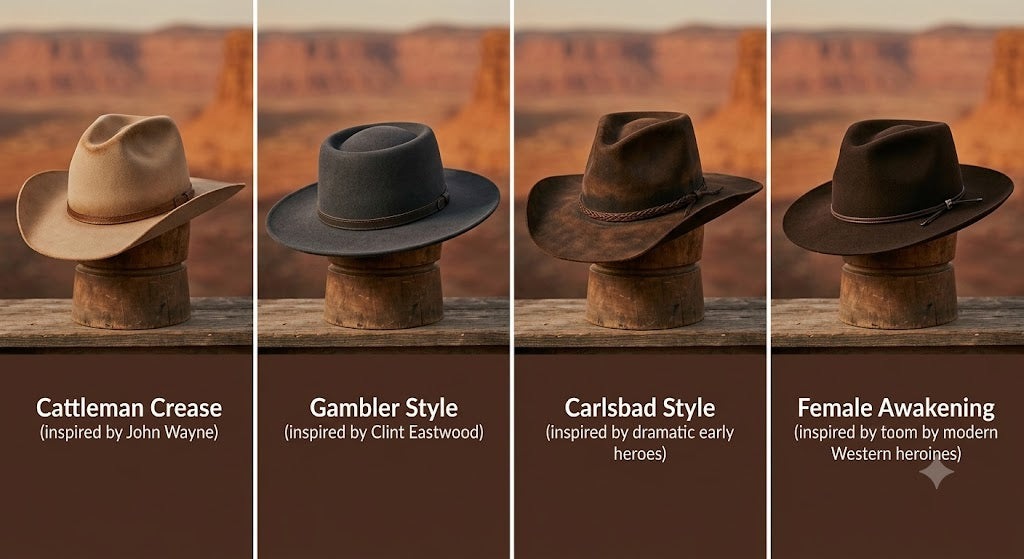
I. A Taxonomy of Classic Western Film Hats: The Visual Language of Creases and Silhouettes
The soul of a cowboy hat is dictated entirely by the crease of its crown and the curvature of its brim. In cinema, different combinations have evolved into distinct visual dialects:
1. The Cattleman: The Totem of Tradition and Order
The Cattleman is the most dominant and traditional hat style in Western cinema. It features a distinct crease down the center of the crown flanked by two smaller side indents, with a brim that curls slightly upward at the sides.
- Cinematic Aura: It represents the establishment, authority, law, and the classic pioneering spirit. The variations worn by John Wayne across countless Western myths are prime examples, embodying an unshakeable, righteous heroism.
2. The Gambler / Open Crown: The Vagabond of Fate
Featuring a flat, rounded crown (often with no top crease) and a wide, completely flat brim, this style carries heavy Mexican and New Mexican cultural influences.
- Cinematic Aura: Breaking away from traditional structures, this hat exudes rebellion, mystery, and unpredictability. Clint Eastwood's iconic "Man with No Name" in Spaghetti Westerns frequently utilized flat-brimmed styles, perfectly framing his morally ambiguous, law-defying bounty hunter persona.
3. The Carlsbad (The Tom Mix Style): The Dramatic Statement
Characterized by an exceptionally high, forward-sloping crown with dramatic, exaggerated creases and a sweeping, wavy brim.
- Cinematic Aura: Popular during early black-and-white silent films and highly romanticized golden-age Westerns. It symbolizes fearless passion, grand theatricality, and a larger-than-life heroic romanticism.
II. Crown and Soul: How the Cowboy Hat Sculpts Character Depth
In the visual grammar of Hollywood, a hat functions as a "moral calling card" and a "psychological barometer."
1. The Black-and-White Moral Code
The most direct visual cue of early Westerns was the dichotomy of "white hats for heroes, black hats for villains."
- Light, sand-toned hats gleamed under the desert sun, projecting transparency, justice, and the purity of redemption.
- Deep black or dark charcoal hats cast deep shadows over an actor's eyes, subtly hinting at corruption, greed, or an unpredictable, dangerous nature.
2. The Narrative in the Weathering
The age and texture of a hat reflect a character's survival on the frontier. A pristine, impeccably shaped hat belongs to those in high legal or social standing. Conversely, a hat with frayed edges, a collapsed crown, or stains from sweat and gunpowder belongs to the "anti-hero." This weathering isn't just grime—it is a passport stamped by the harsh realities of the wild.
3. Emotion Beneath the Brim
Directors frequently use the tilt of a brim to capture shifting internal tides. A brim pulled low, revealing only a sharp glance, signals cold focus and a lethal readiness. In contrast, pushing the hat back to expose the forehead reveals vulnerability, confusion, or a rare moment of relaxation by the campfire.
III. The Awakening Horizon: Female Hat Aesthetics in Modern Westerns
As contemporary cinema reconstructs the frontier narrative, women are no longer just passive damsels waiting for rescue in the saloon. When they put on a cowboy hat, this historically male-dominated accessory sparks a powerful "aesthetic of strength."
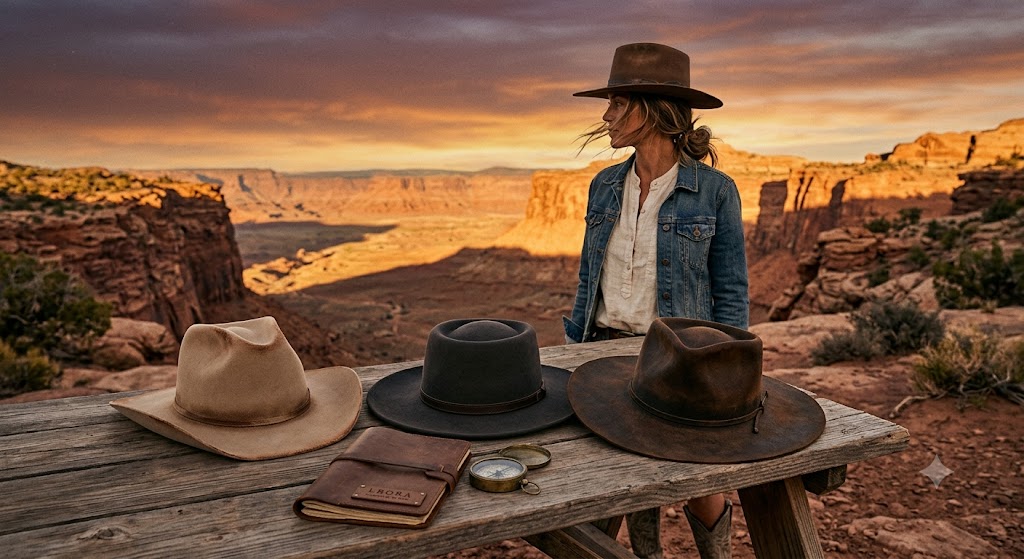
In critically acclaimed modern Western series, the awakening of female characters (such as the resilient widows of Godless or Dolores in the sci-fi Western Westworld) is almost always mirrored by their headwear.
Moving from an initial vulnerable state—often depicted hatless with soft, flowing hair—they eventually transition into crisp, sharp-edged cowboy hats in deep black or rugged tobacco tones. Beneath those wide brims lie steady, unblinking eyes. At this moment, the hat ceases to be a borrowed masculine prop; it becomes a crown of sovereignty and a battle uniform for self-determination. They fuse feminine depth with frontier grit, carving out a destiny entirely their own.
IV. Find Your Frontier Totem: The Inspired Collections at shoplbora.com
While the dust of the cinematic old west has settled, the yearning for freedom, bravery, and independence remains woven into the fabric of modern life. At shoplbora.com, we deeply deconstruct these silver-screen aesthetics. We reject literal, costume-like replicas. Instead, we extract their untamed essence to design a Western-Inspired Hat Collection tailored for modern urban environments and light outdoor escapes.


